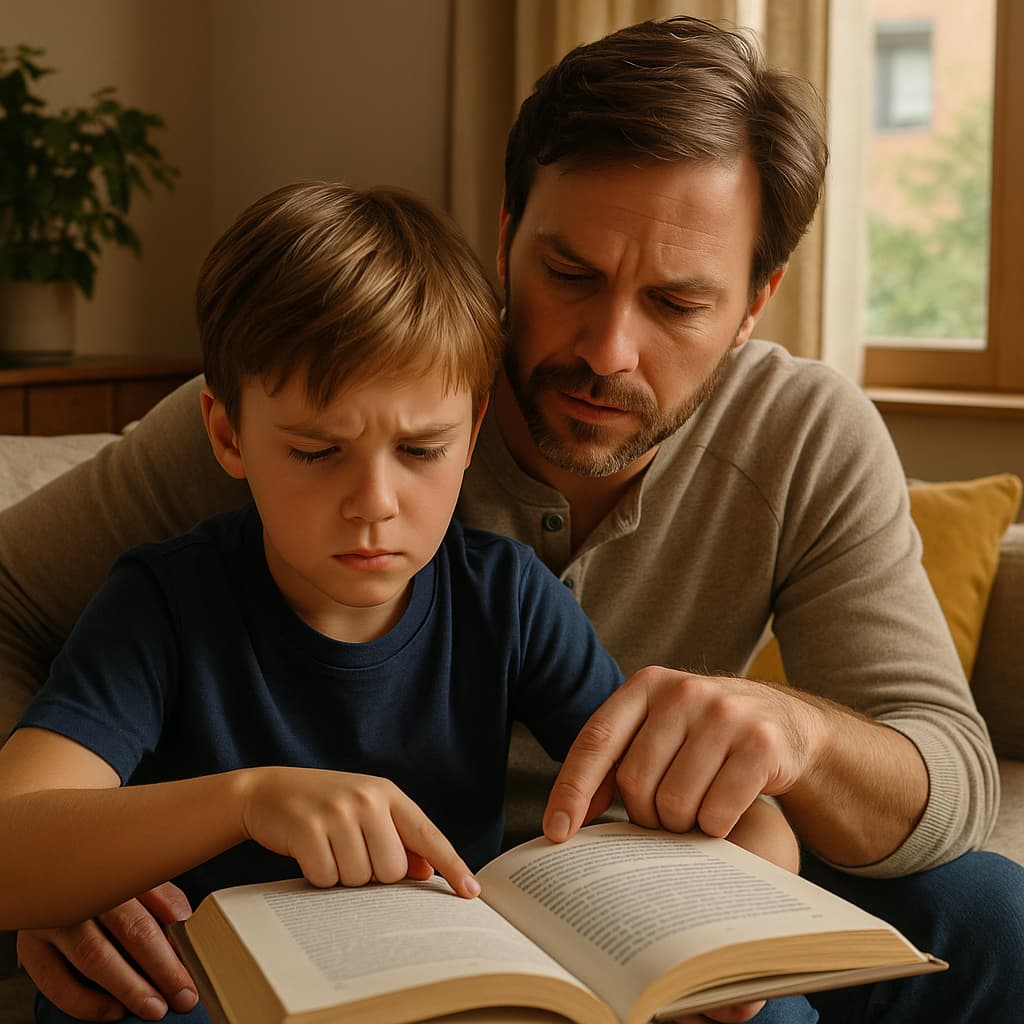
4 signs that your child may need vergence training
As a parent, you want to give your child the best possible conditions in life and school. A well-functioning vision is something that affects both school results and quality of life. Unfortunately, vergence problems in children can often go under the radar, especially when they themselves do not show problems such as blurred vision or other obvious symptoms. Many children actually struggle with hidden vergence problems that affect both their learning, concentration and sometimes even their behavior. Often, these problems can be difficult to detect through a regular eye examination.
What is vergence training?
Vergence training, also known as orthoptic training, is a method that aims to improve or correct various vision problems through specific exercises for the eyes and brain. In short, vision training is used to train the brain's ability to control the eyes. Vergence training is often used to treat problems that cannot always be solved with glasses or contact lenses, such as strabismus, double vision, focusing problems and vision problems. See below how Imvi works:
Stream your favorite series in VR
Train while streaming your favorite shows
Through the app you choose what type of content you want to watch. We currently support content from Youtube, SVT Play, Binogi, UR Play and content directly from your phone's camera roll.
Train your eye coordination
You watch your series -
Our App does the rest
The training focuses on improving the brain's control of the eyes for better eye coordination. This improves blood flow and oxygenation of the brain, which increases reading speed, reading endurance and concentration.
Follow your progress
Personalized tips based on your progress
In the app you can follow your or your children's development and results. We offer free accounts for parents to monitor their children's progress! After completing the training, you will receive personal recommendations for further training based on your results and progress.
1. Slow reading speed
Children who read slowly may struggle with vergence problems that affect their ability to move their eyes smoothly from word to word or line to line. They may also have difficulty focusing on the text for long periods of time, which means they have to reread the same sentence several times to understand it. In some cases, the child may skip words or lines, making reading both slow and frustrating. If reading feels tiring, the child may also start to avoid reading altogether, which can affect their confidence and reading ability in the long run. Cross-eye training can help improve eye coordination and focusing skills, which can make reading easier and increase reading speed.
2. Difficulty staying focused
If a child quickly loses concentration when reading, writing, or doing other activities, it may be due to problems maintaining a steady focus. The difficulty in keeping the eyes focused at close range can lead to the child becoming easily tired or frustrated, making it difficult to complete tasks. Some children also experience eye strain or a mild discomfort that they may not always be able to describe, but which causes them to avoid close-up work. This can also affect their motivation to study and their ability to keep up in the classroom. Confocal training can help strengthen the eye's focusing ability and endurance, which can make it easier for the child to maintain concentration for longer periods.
3. Poor results in school
When children have difficulty seeing clearly or focusing properly, their academic performance can be affected, especially in subjects that require reading and writing. If a child often misses instructions, makes mistakes on simple tasks, or has difficulty keeping up in the classroom, it could be because of hidden vision problems that make them struggle to read the board, their books, or worksheets. It can also affect their self-confidence and desire to participate in schoolwork. In some cases, the problems are interpreted as learning disabilities , even though they may have their origins in vision. Vision training can help children improve their visual skills, which can make it easier to follow schoolwork and perform better on tests and assignments.
4. Vergence issues
Vergence problems mean that the eyes do not work together properly, which can lead to the child seeing double, experiencing blurred text, or having difficulty maintaining focus when reading or working up close. Children with vision problems may complain that text “jumps” or that letters blend together, which makes reading and close-up work challenging and tiring. They may also become tired or get headaches after a short period of reading, which leads them to avoid such activities. Vision problems can also affect a child’s coordination, which can be noticeable in activities such as sports and other tasks that require precision. Vergence training can help improve vision by training the eyes to work together effectively, which improves the child’s reading, concentration, and even fine motor skills. Read more about vision problems.
Find out how your child is doing
If you recognize any of these signs in your child, it may be worth investigating whether vergence training can help. We offer a free test that can quickly and easily give an indication of whether your child has vision problems that can affect their schooling and everyday life. Take the first step today – take the test and get a clearer picture of your child's vision health!
Rune Brautaset explains
why Imvi helps
Professor of Optometry and Head of Department at Karolinska Institutet
"In reading, where phonetics and eye coordination must work together, you have extra capacity to control your eyes, which makes reading and interpreting what you read easier."